
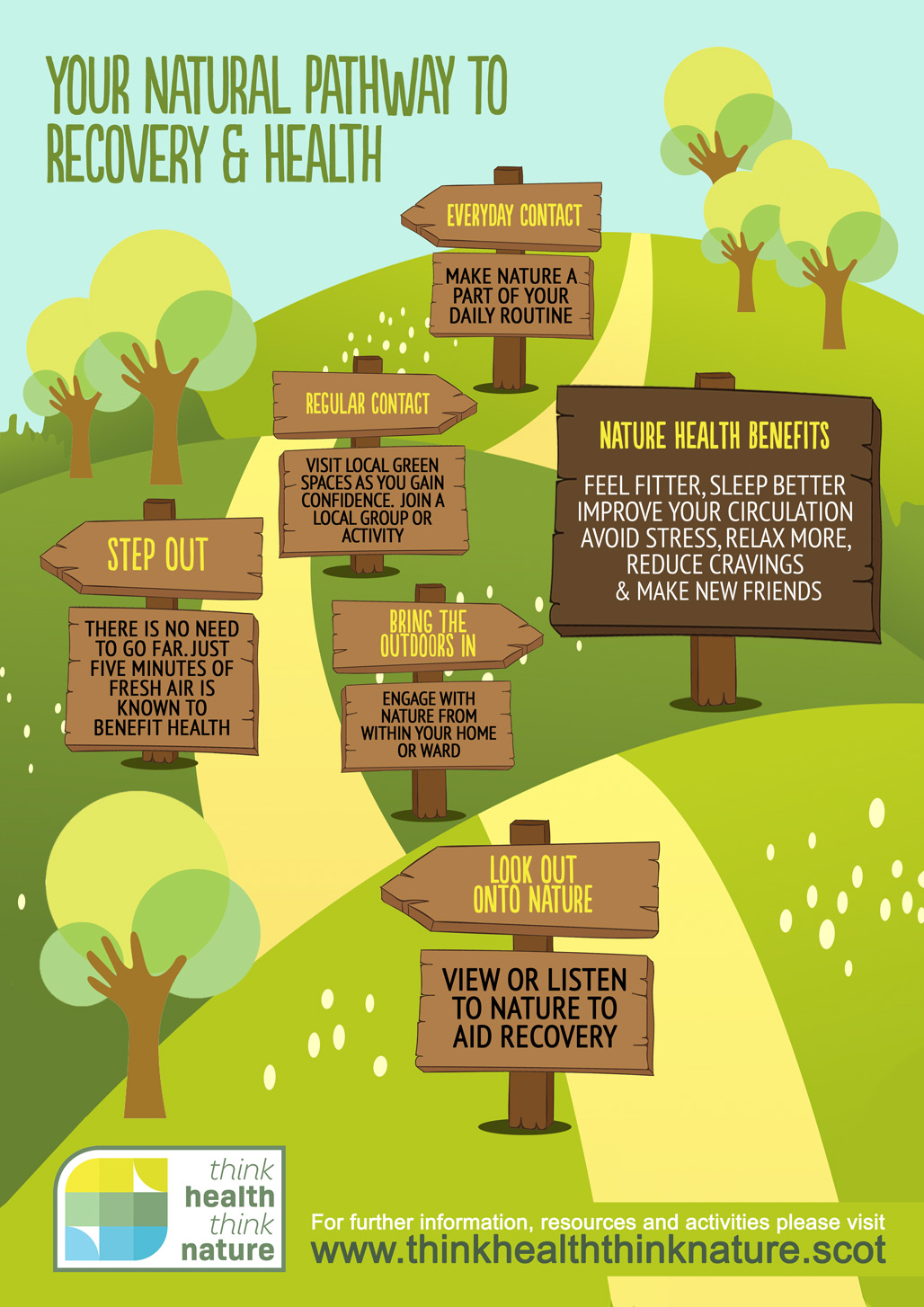
 Your Natural Pathway to Recovery & Health
Staying active and connecting with nature on a regular basis is important for everyone’s health and wellbeing. The Pathway to Recovery and Health is a diagram that can be used to help you decide what level of engagement would most suit you.
The benefits of being outdoors are universal, whatever your age, ability or health condition. Even a short time in the fresh air is known to help to improve sleep, reduce stress and make you feel more energised. If you have any concerns please check with your medical practitioner.
Anyone can suffer from ill health or injury. The Pathway to Recovery and Health aims to shows the ways to connect with nature, regardless of where you might be on your health journey.
Follow the step by step guide to find the most suitable starting point for you. If you suffer a set-back, for any reason, you can find a new starting point and explore different ways to connect with nature.
Have a look at our website directory for activities to get involved with in your local area. We also have a list of ideas for self-led activities. You may find our condition-specific guidance on our advice pages of interest too.
Step 1 – Look Out Onto Nature
Perhaps you are housebound, in a care home or a ward? Evidence has shown that viewing or listening to nature can aid recovery from illness or injury, and improve general wellbeing. Open the curtains or blinds. Position yourself in the sunlight and take in a view of a landscape or garden. Open a window. Smell the fresh air and listen to any sounds of nature from outside.
Step 2 – Bring the Outdoors In
For many going outside is not an option due to physical or mental ill health. There are ways to engage with nature from within your home or ward. You can make creative artwork from items brought in from nature and explore textures and scents of items gathered and collected. You could feed the birds from your windowsill or plant seeds ready to grow inside or outside. For ideas and inspirations visit the resources section on our website.
Step 3 – Step Out
You may need the support of a friend, family member or health professional to help you venture outside. Walking is the easiest and most accessible outdoor activity but you may prefer cycling or gardening. There is no need to go far or for long. Sitting in your front garden or a local path bench may be all that is needed to feel the benefits.
Step 4 – Regular Contact
Try to go out more frequently. Try to get out for further and longer each time you go out. Find a local place to visit by exploring the local green spaces on our website. There are many groups and activities to join that cater for a variety of audiences and interests. Check out our local directory for information about your locality. Connect with likeminded people for companionship and support.
Step 5 – Everyday Contact
Build contact with nature into your every day routine. It is a great way to maintain good health and help to minimise the risk of long term health problems such as high blood pressure and heart disease. It reduces daily stress or anxiety, and exercise outside can help you to meet the recommended weekly exercise amount of 2.5 hours or more over the course of the week.