Think Health Think Nature was initiated as one of four pilot projects in Scotland being supported through Our Natural Health Service – a programme led by NatureScot and underpinned by a strong evidence base.
Research from Scotland and around the world shows that Green Health can support health, wellbeing and quality of life. However, access to nature, greenspace and outdoor opportunities is not experienced equally. A growing body of evidence suggests that improving access to high-quality green spaces should be supported with targeted support for participation into green health activities to maximise benefits for individuals who stand the most to benefit.
The benefits of Green Health were well documented in A Dose of Nature evidence summary report by Exeter University, written in 2014.
The report highlights an extensive list of benefits to individuals;
- Can reduce the experience of pain.
- Can improve immune function
- Can protects against cardiovascular disease
- Helps to lower blood pressure
- Relief from acute stress
- Improves self- esteem
- Can speed up recovery from illness or injury
- Combats fatigue
- Benefits those suffering depression/anxiety
- Helps tackle loneliness
- Reduces ADHD symptoms in children
- Can improve concentration
- Can prevent and manage diabetes
- Reduced mortality
- Promotes physical activity
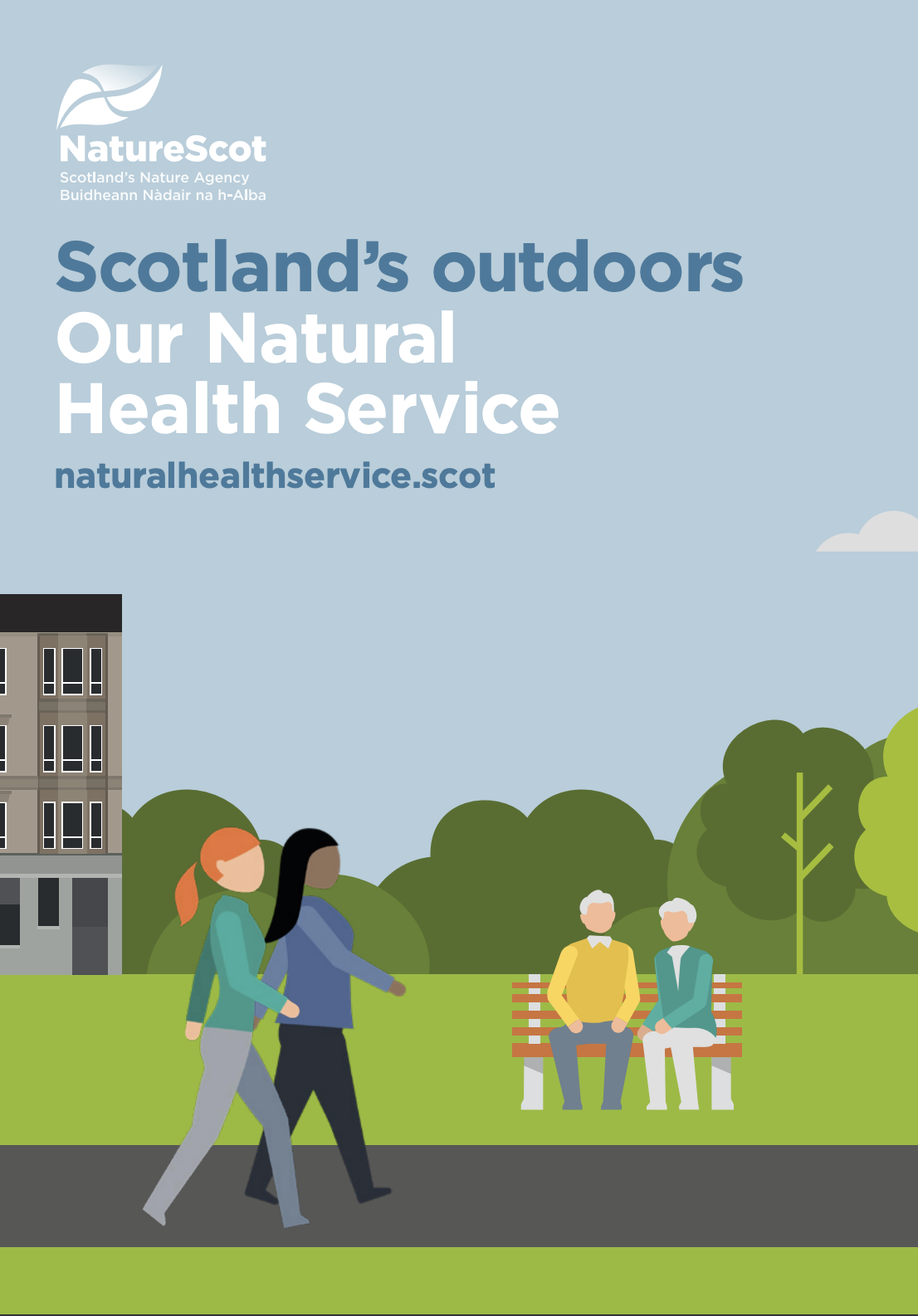
For more information you may also like to download the Our Natural Health Service leaflet.
Research continues to demonstrate that Green Health supports physical, mental and social wellbeing across all stages of life. This page brings together evidence, evaluations and learning from Highland and beyond. The literature review for this evidence base was kindly supported by University of Highlands and Islands (UHI), Highland Health Sciences Librarian Service and Mason McLeod, PhD research student at UHI.
The existing research is broad, across a wide range of themes. Here we highlight key research using quality of life indicators as a framework and highlight how green health links to prevention work and the climate crisis. Click on the title for more information.

Research continues to show that Green Health can support physical health throughout life. Time in green and blue spaces can encourage physical activity, improve general health and wellbeing, and support healthy ageing (Elliot et al., 2023). Reviews have found benefits across a range of physical health outcomes (Marini et al., 2022), while evidence in older adults suggests that access to green space may support healthier ageing, including lower risks of depression, cognitive decline and some long-term health conditions (Wang et al., 2026).
In Highland, research and evaluation have also explored the contribution of Green Health to physical wellbeing. Studies undertaken with the University of the Highlands and Islands have examined green exercise, cycling initiatives and outdoor activity for people living with Type 2 diabetes, helping to strengthen understanding of how nature-based approaches can support active lifestyles and long-term health in Highland communities (Fraser et al. 2020).
Green Health supports physical activity, recovery and lifelong health across all stages of life.
An international study across 18 countries found that access to and use of green and blue spaces was associated with better mental health (White et al., 2021), while a recent systematic review concluded that nature-based interventions can improve outcomes such as stress, anxiety and depression, with benefits comparable in some cases to established therapeutic approaches (Heinen-Stach et al., 2026).
University of Stirling, Green Threads: Weaving Stories of Nature and Recovery demonstrates how connection with nature can support hope, resilience and recovery. In Highland, research and evaluation have explored the role of Green Health in supporting mental wellbeing and recovery. Work with the University of the Highlands and Islands investigated Nature Walks for Wellbeing for people experiencing severe mental illness (Hubbard et al., 2020).
Green Health supports mental wellbeing, resilience, reflection and recovery.

Green threads: weaving stories of nature and recovery
Dr Wendy Masterton from Stirling University has led a Society for the Study of Addiction-funded project to develop a powerful documentary exploring the role of nature in recovery. The film titled, Green Threads: Weaving stories of nature and recovery captures the transformative impact that nature-based approaches can have on individuals in recovery services. The film doesn’t just showcase stunning visuals – it brings to life real stories and powerful examples of how connecting with nature can support healing, growth, and wellbeing. It’s a moving reminder of the strength found in open spaces and the resilience of those on their recovery journey.
This documentary builds on Wendy’s previous research and the development of nature-based programme guidance manuals.
🎞️ Trailer – a quick glimpse into what the film offers
📽️ Full Documentary – for the complete experience

Castro et al. (2026) found that people with greater exposure to green, blue and biodiverse spaces were less likely to report loneliness, suggesting that access to nature-rich environments may help strengthen social wellbeing and foster a greater sense of connection.
In Highland, evaluation of Green Health Prescriptions and community-based activities has highlighted the importance of social connection as a pathway to improved wellbeing. Learning from Green Health Packs and Events also demonstrated the value of shared outdoor experiences in reducing isolation and strengthening community connections.
Green Health strengthens social connections and community wellbeing.
A systematic review by Fry et al. (2026) found that changes to outdoor environments, such as improving parks, creating gardens, planting trees and developing greenways, can support health and wellbeing, reinforcing the importance of investing in nature-rich places that enable people and communities to thrive.
In Highland, research has helped improve understanding of how people access and use local greenspaces. Research with pregnant women and young families in Badenoch and Strathspey explored barriers and opportunities affecting greenspace use, while work by the James Hutton Institute has contributed to wider understanding of the relationship between place, greenspace and health.
Green Health helps create environments that support healthier lives.
Research suggests that Green Health can play a role in reducing health inequalities. Evidence from Wales found that visiting nature was associated with higher levels of wellbeing and smaller gaps in wellbeing between socioeconomic groups (Garrett et al., 2023). UK-wide research has also found that deprived communities often have less access to green space, despite greater green space being associated with lower rates of preventable death, reinforcing the importance of equitable access to natural environments as a public health priority (Ngan et al., 2025).
Fair access to nature is an important part of creating healthier and more equitable communities.
Green Health can be a cost-effective approach to prevention. An economic assessment of a Wildlife Trusts nature-based programme found that every £1 invested generated an estimated £2.16 in social and health-related benefits with potential NHS savings of £635.6 million if scaled nationally (The Wildlife Trusts, 2023).
A 2023 evaluation of a green social prescribing programme in North Wales found that every £1 invested generated up to £5.36 in social value through improved health, wellbeing and social connection (Makanjuola et al., 2023).
In Highland, evaluation has been an important part of the Green Health Partnership’s work. Learning from Green Health Prescriptions, Green Health Packs and Events, and wider partnership activity has helped inform service development, strengthen referral pathways and build the case for continued investment in preventative, nature-based approaches to health and wellbeing.
Green Health supports prevention and there is growing evidence of strong return on investment for people, communities and health systems
Emerging evidence suggests that Green Health can play an important role in responding to the climate crisis. Nature-based activities can strengthen people’s connection with nature, which is consistently associated with greater engagement in pro-environmental behaviours and environmental stewardship (Guazzini et al., 2025). Research also highlights the potential of nature connection to support psychological resilience in the face of climate-related concerns, including eco-anxiety, by fostering hope, agency and meaningful action. Nature-based approaches can also strengthen community resilience by building social connection, collective action and stronger relationships between people and the natural environment, all of which are increasingly recognised as important for adapting to climate change (Locatelli et al., 2025). International evidence further identifies nature-based solutions as delivering benefits for human health, climate adaptation and biodiversity simultaneously, offering a ‘triple win’ for people, place and planet (WHO & IUCN, 2024).
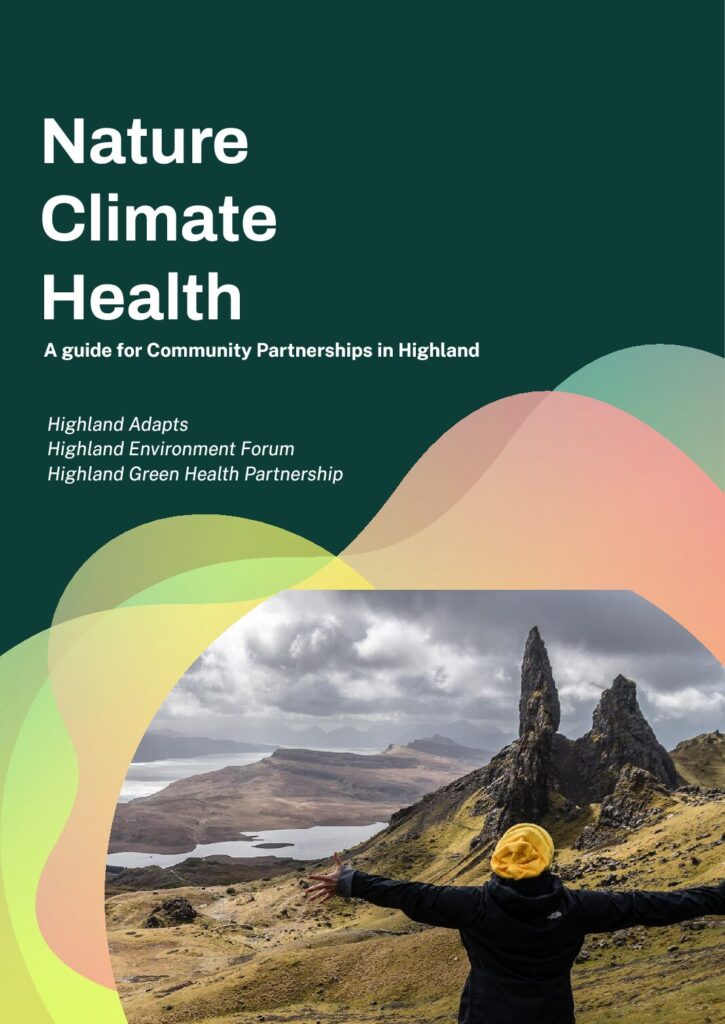
In 2023 Highland Adapts, Highland Environment Forum and Highland Green Health Partnership wrote a guide for Community Partnerships in Highland to highlight the interconnections between nature, climate and health.
In 2024 the Highland Charter for Climate, Nature and Health was launched. The Charter has now reached 100 signatories – 42 organisations and 58 individuals. This growing network demonstrates the strength of collaborative action across the Highlands and the commitment to creating a healthier, more sustainable and resilient region.
Highland Research & Learning
Alongside national and international research, the Highland Green Health Partnership has supported and contributed to a growing body of local research, evaluation and learning. This work helps us understand how Green Health is experienced in Highland communities, informs service development and strengthens the evidence base for nature-based approaches to health and wellbeing. Our learning comes from a range of sources, including university partnerships, student research projects, programme evaluations and community-based initiatives.
Partnerships with universities are important in helping to evaluate programmes, generate new knowledge and strengthen the evidence base for Green Health. Researchers from the University of the Highlands and Islands, alongside colleagues from other universities, have made significant contributions to understanding how nature-based approaches can support physical health, mental wellbeing, active lifestyles and community wellbeing. This growing body of work highlights both the strong research interest in Green Health across the Highlands and Islands and the value of linking research with practice.
Stepping Stones- Community Led Pathways to Green Health
Partnership projects in Ullapool and Kinlochleven aim to test community led pathways to green health activity. The Kinlochleven Trust and Ullapool & Lochbroom Development Trust are working with the University of Highlands and Islands to evaluate this innovative pathway which focusses on the assets of the local community. Evaluation methods include training green health coordinators to be community researchers and carry out qualitative interviews with participants, green health providers and community members supported by ongoing reflections from the green health coordinators and surveys for individual activities.
Enabling Connections through Green and Creative Spaces- Innovation Challenge Project
This work has been developed through new funding awarded to NHS Highland CAMHS to deliver community-based interventions alongside essential, third-sector partners, working in the Inverness and Lochaber localities. The aim is to support young people’s mental health while addressing the growing health and healthcare inequalities that shape both their present and future wellbeing. Evaluation is being led by Aberdeen University, alongside partners, and will focus on qualitative data through reflective diaries and observations and semi-structured interviews with young people.
Healthy Young Minds
*Summary coming. Evaluation leads- University of South Wales, University of Dundee and University of Highlands & Islands
Dundreggan Dementia Project
*Summary Coming. Evaluation Leads University of Highlands and Islands
- Bespoked’ Cycle to Health Evaluation Report: Promoting health, well-being & active travel through an Inverness social enterprise — University of the Highlands and Islands
- What motivates participants to adhere to green exercise? — University of the Highlands and Islands
- Does the mode of exercise influence the benefits obtained by green exercise? — University of the Highlands and Islands
- Velocity Cycle to Health — University of the Highlands and Islands
- Fraser et al. (2020) Psychological Effects of Outdoor Activity in Type 2 Diabetes: A Review — University of the Highlands and Islands
- Hubbard et al. (2020) Co-production of “nature walks for wellbeing” public health intervention for people with severe mental illness: Use of theory and practical know-how — University of the Highlands and Islands
Understanding the barriers to utilising the greenspace in pregnant women and young families in the Aviemore Area.
This study was undertaken by a 3rd Year Medical student from Aberdeen University working on a six week placement with the Think Health Think Nature, in 2019. It has helped to inform Green Health developments in the Badenoch & Strathspey area.
*Report Link Coming
Learning from the COVID-19 Pandemic
A survey of Key Workers and those who have been shielding due to COVID19 on access to greenspace and exercise during lockdown.
The study was undertaken by a 3rd year Medical Student from Aberdeen University on a six week placement with Think Health Think Nature, in 2020. It has helped to inform the partnership’s response to COVID. Access to Greenspace and Exercise During Lockdown.
Green Health Packs and Events Evaluation Report
The Green Health Events and Packs project formed part of the Think Health Think Nature work programme of the Highland Green Health Partnership and were delivered throughout 2020. This report, carried out by Hilliam Research and Analysis, evaluates the success of the initiative and makes recommendations for any roll out of similar funding initiatives in the future. Read the Green Health Packs and Events Independent Evaluation Report.
Green Health Partnerships in Scotland – An Evaluation of the First Three Years
As the core element of implementing the ONHS programme, four pilot Green Health Partnerships (GHPs) were set up in 2018 to demonstrate how better cross-sectoral coordination can mainstream approaches to improving health through engagement with the natural environment. They were in Dundee, Lanarkshire, North Ayrshire and Highland. The Green Health Partnerships in Scotland- An Evaluation of the First Three Years report presents an overview of how the GHPs worked to achieve five key aims in the first three years of operation.
The James Hutton Institute has carried out a number of studies on the contribution of green and open space in public health and wellbeing. The aim of the project was to explore the relationship between green space and human health using a range of methods and disciplinary approaches at different scales. To read the reports click here.
An evaluation of Green Health Prescriptions across Dundee, Highland, and North Ayrshire
One of the original elements of Green Health Partnerships was the drive to setup and run Green Health Prescription Green Health Prescription (GHPr) pathways, where service users receive a prescription from a healthcare professional, community service, or self-refer. The GHPr allows healthcare professionals to connect patients with free or low-cost outdoor activities delivered and supported by the third sector, including charities and volunteer groups. At the time of this evaluation, Dundee, North Ayrshire, and Highland are in various stages of embedding the GHPr into the referral pathways that they offer. It is, therefore, an ideal time to see what the people coordinating and participating in GHPr think of it. Read the Evaluation from the Public Health Interventions Responsive Studies team – An Evaluation of Green Health Prescriptions across Dundee, Highland and North Ayrshire.
Research Limitations and Emerging Areas
Coming soon!
Do your own search!
Coming soon! Link to PubMed with open access articles.
Invitation to carry out research projects
We are always interested in hearing from students, researchers, practitioners and community organisations who would like to explore Green Health through research, evaluation or quality improvement projects. Whether you are undertaking a student placement, dissertation, service evaluation, collaborative research project or practice-based enquiry, we welcome opportunities to learn together and strengthen the evidence base for Green Health in Highland. If you have an idea or would like to discuss a potential project, please get in touch- greenhealthhighland@gmail.com
- Castro et al. (2026) Exposure to Green, Blue and Biodiverse Spaces and Loneliness
- Elliott et al. (2023) Nature Contact and General Health
- Fraser et al. (2020) Psychological Effects of Outdoor Activity in Type 2 Diabetes: A Review
- Fry et al. (2026) The effect of place-based nature interventions on human health: A systematic review
- Garrett et al. (2023) Visiting Nature is Associated with Lower Socioeconomic Inequalities in Wellbeing in Wales
- Guazzini et al. (2025) Systematic Review on Nature Connectedness and Pro-Environmental Behaviour
- Harrison et al. (2023) Benefits of Nature-Based Interventions in Socio-Economically Deprived Communities
- Heinen-Stach et al (2026) The effectiveness of nature-based interventions on mental health: A systematic review
- Hubbard et al. (2020) Co-production of “nature walks for wellbeing” public health intervention for people with severe mental illness: Use of theory and practical know-how — University of the Highlands and Islands
- Locatelli et al. (2025) People-Nature Relations and Climate Adaptation
- Makanjuola et al (2023) Prevention of Poor Physical and Mental Health through the Green Social Prescribing Opening Doors to the Outdoors Programme: A Social Return on Investment Analysis
- Marini et al. (2022) The Effect of Physical Activity Interventions Carried Out in Outdoor Natural Blue and Green Spaces on Health Outcomes: A Systematic Review
- Ngan et al. (2025) Inequality in green space distribution and its association with preventable deaths across urban neighbourhoods in the UK, stratified by Index of Multiple Deprivation
- The Wildlife Trusts (2023) A natural health service: Improving lives and saving money
- Wang et al (2026) Association between green space exposure and elderly health: a systematic review and meta-analysis
- White et al. (2021) Associations between Green/Blue Spaces and Mental Health Across 18 Countries
- WHO & IUCN (2024) Nature-Based Solutions for Health